
Climate Change & Environment

Environmental Stewardship Through Climate Smart Agriculture, Agroforestry and Livestock
Zoe Rwanda Terimbere believes that environmental restoration and poverty reduction must go hand in hand. Through its eco-Terimbere model, the organization trains vulnerable youth and families in climate-smart agriculture, agroforestry, sustainable livestock management, and responsible animal keeping to restore soils, protect water and biodiversity, and improve household food security. Supported by well-trained staff, local agronomists, and professional veterinarians, the programme combines practical environmental stewardship with sustainable livelihood development, helping communities build long-term resilience while remaining connected to Rwanda’s formal agricultural and animal health systems.
Key elements of this model:
Strong technical foundation: Zoe’s staff receive regular capacity building on modern climate-smart agriculture, sustainable animal keeping, and environmental protection.
Local expert collaboration: Sector and district agronomists, together with veterinarians, provide specialized advice, follow-up, and case management when complex environmental or animal health issues arise.
Youth and vulnerable family-centered delivery: Training, inputs, nurseries, and coaching target youth-headed and vulnerable households, increasing resilience where climate risks and livelihood pressures are highest.
Climate-Smart Agriculture
Building soil health and preventing erosion
Zoe Rwanda Terimbere trains farmers and vulnerable households in practical soil conservation methods that restore land productivity and strengthen climate resilience. Participants learn how to improve soil health through composting, mulching, erosion control, contour farming, and the responsible use of organic matter such as manure and crop residues. Working closely with agronomists and agricultural extension agents, families adopt sustainable “closed-loop” farming systems where waste is recycled back into the soil, helping maintain soil cover, reduce erosion, improve water retention, and create more productive farms that can better withstand heavy rains and dry seasons.
Balancing chemical fertilizer and compost
We promote sustainable soil fertility management by teaching households to combine organic and mineral fertilizers in ways that improve both crop productivity and long-term soil health. Participants are encouraged to prioritize composted manure and crop residues to strengthen soil structure, increase water retention, and build natural fertility, while also learning how to apply mineral fertilizers carefully and efficiently when needed. This balanced approach helps families achieve better harvests, improve food security, and maintain productive farmland that remains resilient and sustainable for future generations.
Distribution of improved seeds
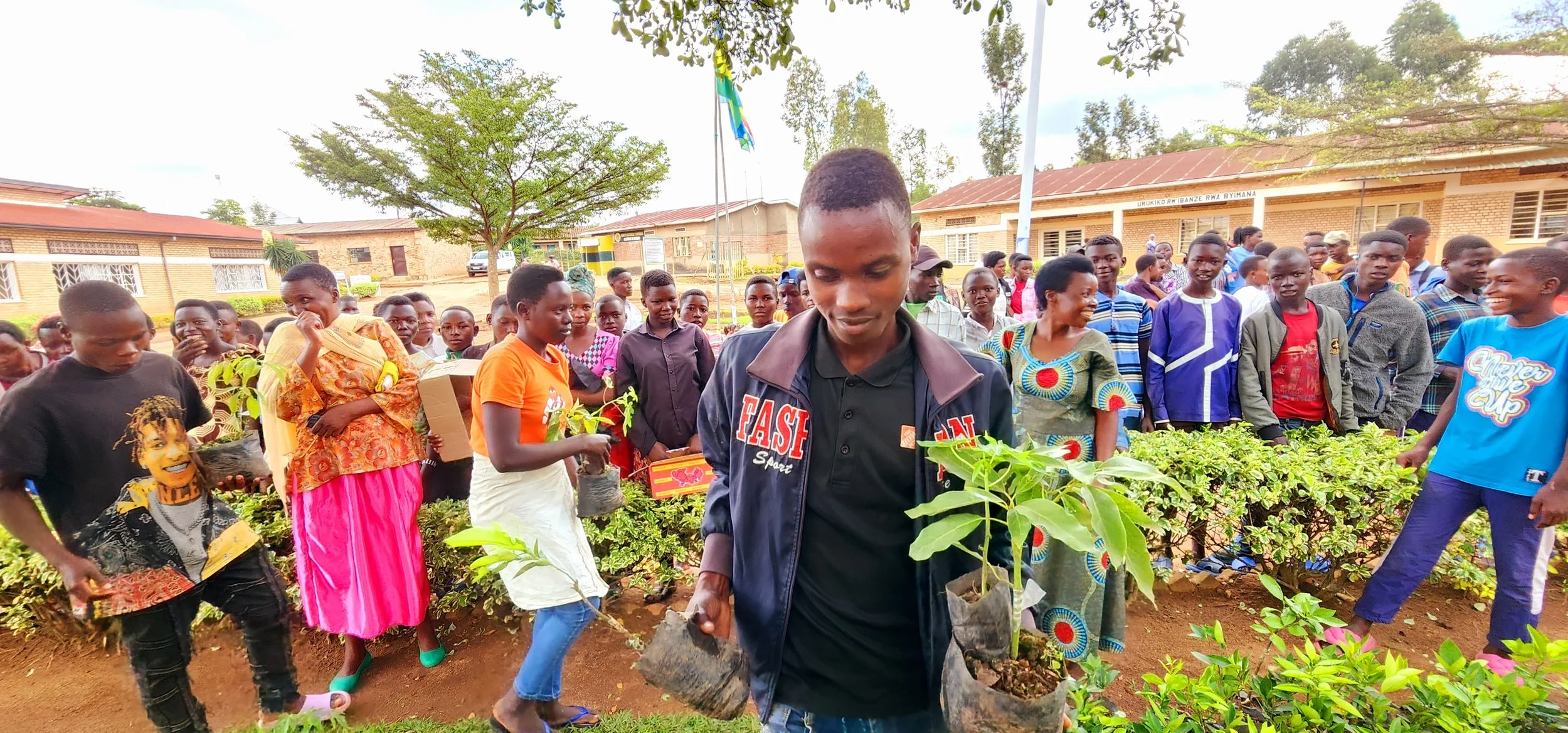
Zoe supports households to access and plant improved seeds as a practical way to produce more food on the same land area. Participants receive quality seed for staple and horticultural crops such as maize, Irish potatoes, bananas, cassava, and diverse vegetables. Along with seed distribution, ZOE provides hands-on training on seed choice, planting density, spacing, depth, and timing so that each seed has a better chance to germinate and reach maturity, reducing replanting and unnecessary land expansion.
Improved seeds are linked with other climate-smart practices promoted by the program. Households are encouraged to establish small, intensive kitchen gardens near their homes using these seeds, combined with organic manure from animal shelters. This helps families harvest diverse, nutrient-rich food in a very small area, maintain continuous soil cover, and place production close to water and compost sources. As a result, families strengthen food security while maintaining green, productive homesteads.
Climate-smart crop management
Zoe Rwanda Terimbere equips youth and vulnerable families with climate-smart crop management practices such as crop rotation, intercropping, and mixed farming systems that improve soil health and increase productivity. By rotating legumes, grains, and root crops and using improved crop varieties suited to local conditions, participants reduce pest and disease pressure, limit dependence on chemical pesticides, and strengthen resilience to changing rainfall patterns. These sustainable farming methods help maintain soil cover, improve yields on small plots of land, and reduce pressure on fragile ecosystems and forests.
Animal distribution and keeping without environmental damage
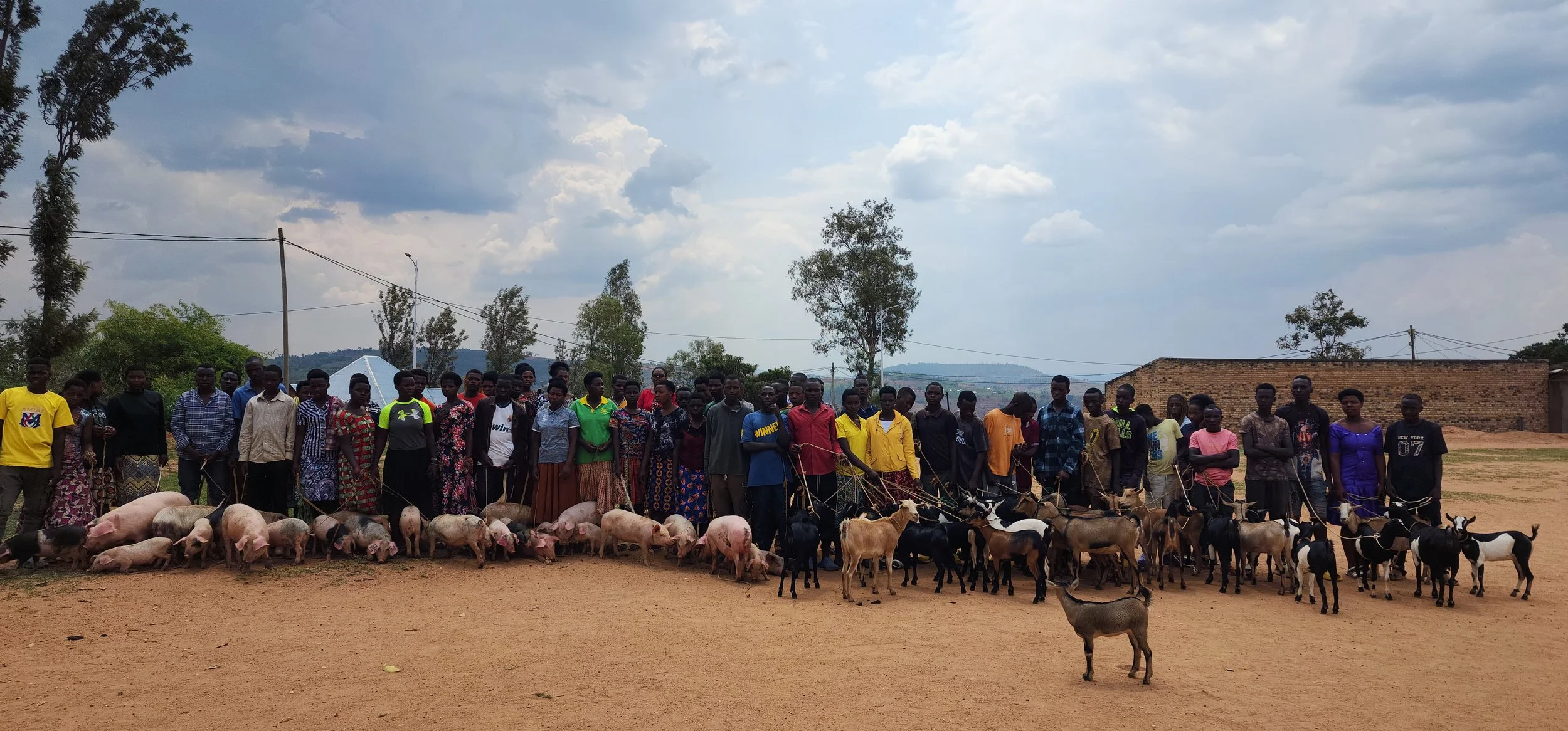
Zoe Rwanda Terimbere provides livestock to all enrolled households and promotes an animal-keeping system that protects both the environment and family health. Goats, pigs, poultry, rabbits, and cattle are kept in well-constructed shelters instead of roaming freely. This makes manure collection easy, prevents damage to fields and young trees, and reduces uncontrolled grazing on hillsides and communal land. Families are trained not to share living space with animals, lowering the risk of disease transmission and improving hygiene around the home.
Through a zero-grazing or controlled-feeding approach, animals are fed cut grasses, crop residues, and other fodder at the homestead rather than grazing directly along hillsides, riverbanks, or in wetlands. Manure from shelters is gathered and composted, then applied to fields and kitchen gardens, closing the nutrient loop and turning a potential pollutant into a resource. This allows new trees and agroforestry plants to grow undisturbed, keeps erosion control measures intact, and helps protect nearby water sources from contamination by livestock.
Green Enterprise Development
Zoe Rwanda Terimbere integrates environmental entrepreneurship into its economic empowerment model by encouraging youth and vulnerable families to invest in green businesses that both generate income and restore the environment. Through business training, mentorship, and technical support from ZOE staff and local agronomists, participants learn how to establish and manage ventures such as tree nurseries, agroforestry projects, and beekeeping enterprises.
The programme also provides practical guidance in areas such as nursery management, grafting, hive construction, and quality control while helping participants connect with local markets and reforestation initiatives. By promoting environmentally responsible enterprises, ZOE Rwanda Terimbere empowers participants to become environmental entrepreneurs who strengthen livelihoods while protecting biodiversity and contributing to Rwanda’s long-term environmental restoration efforts.
Environmental protection and systems linkages
Agroforestry: Trees for Food, Income, and Environmental Healing
Zoe Rwanda Terimbere promotes agroforestry by providing households with fruit tree and agroforestry seedlings, along with training on proper planting and management to restore degraded land and improve livelihoods. Trees are planted around homes, fields, and animal shelters to stabilize soil, reduce erosion, provide shade, and improve resilience to wind and heavy rains, while also producing fruits and income for families. Over time, these trees improve soil fertility, support biodiversity, reduce pressure on natural forests, and transform farms into productive, climate-resilient landscapes that strengthen both environmental restoration and household wellbeing.
Connecting to Local Environmental Networks
Zoe ensures long-term sustainability by integrating its environmental programs with existing local systems, working closely with sector agronomists and veterinarians who support training and field activities alongside ZOE staff. This collaboration aligns the program with national policies and strengthens the delivery of consistent, scalable agricultural and environmental practices. As a result, participating households gain lasting access to essential services such as soil testing, improved seeds, livestock health care, and climate information, making environmental stewardship a continuous relationship between vulnerable families and Rwanda’s broader agricultural and environmental support systems rather than a short-term intervention.
Partnership Opportunities: Where We Are Growing
Zoe Rwanda Terimbere aims to expand its eco-Terimbere model into more rural communities where youth and vulnerable households face high climate risk, especially in areas with degraded soils, limited tree cover, and unreliable rainfall. As part of this growth, Zoe is seeking partners to strengthen smart irrigation options (such as low-cost drip systems, rainwater harvesting, and efficient watering), value chain, green energy solutions (modern clean cookstoves and, where feasible, solar or biogas for efficient household energy), and youth-owned agroforestry and fruit seedling nurseries as viable micro-enterprises (training in nursery management, grafting, quality control, certification, and market linkages to supply nearby communities). increase access to improved seeds and tree seedlings, and deepen collaboration with local agronomists and veterinarians so that more families can adopt climate-smart agriculture, sustainable animal keeping, and strong environmental practices.
Want to partner with us to combat environmental degradation?